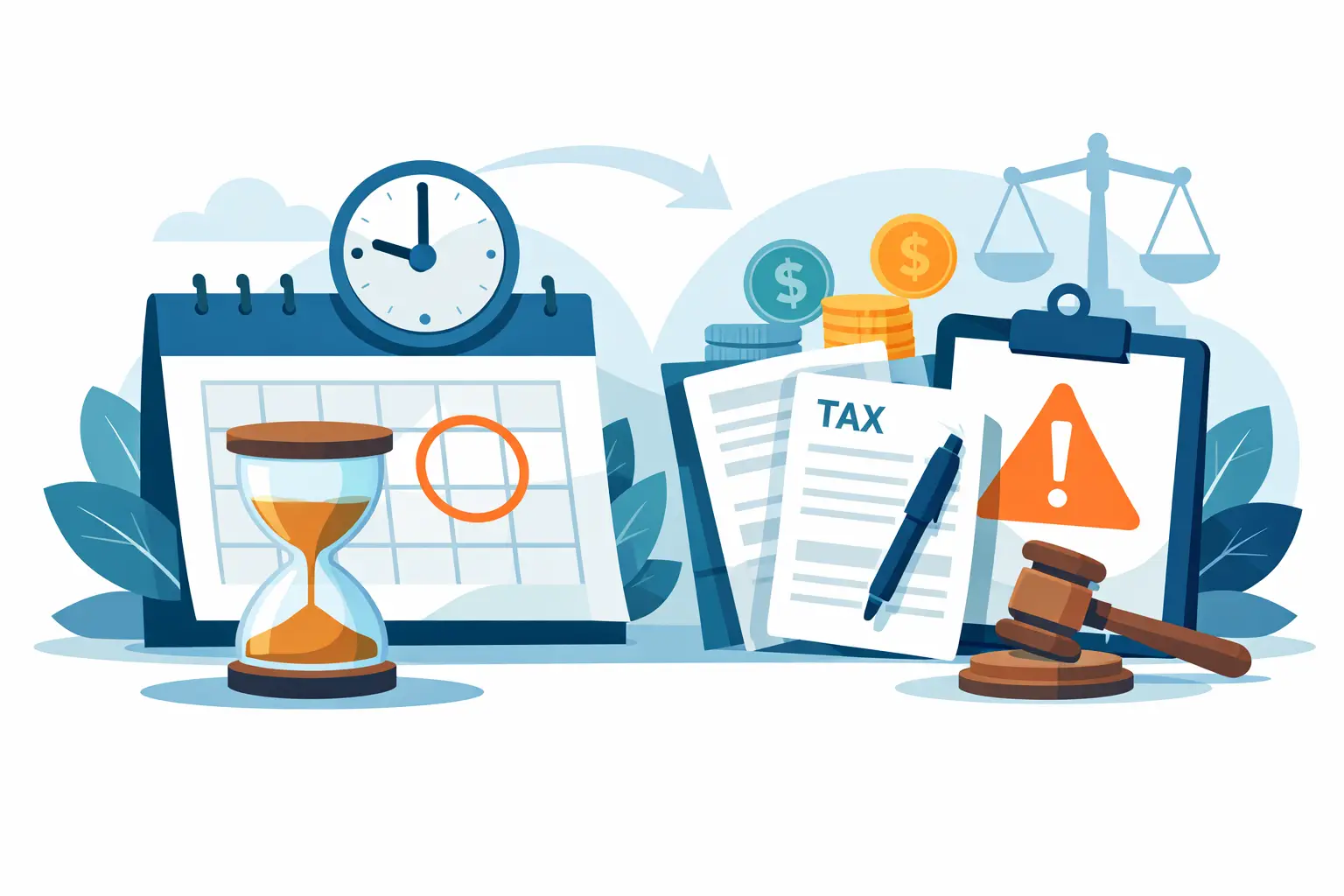
A Realistic Tax Debt Settlement Example Explained

A tax debt settlement example can make a difficult IRS notice feel less abstract. The numbers below show how a taxpayer may qualify for a reduced payoff through an Offer in Compromise, but they also show why settlement is not automatic. The IRS looks closely at income, necessary living expenses, assets, and future ability to pay before accepting less than the full balance.

For Cleveland taxpayers and business owners, the most useful starting point is not a promise of pennies on the dollar. It is an accurate review of the debt, the tax years involved, current filing status, and realistic payment capacity. That foundation helps determine whether a settlement, payment plan, penalty relief request, or another resolution is the right path.

A Tax Debt Settlement Example With Realistic Numbers

Consider a self-employed Ohio contractor, whom we will call Marcus. After a difficult stretch of uneven work, Marcus fell behind on estimated tax payments and did not have enough cash available when he filed his returns. By the time he sought help, he owed the IRS $38,000 across two tax years. That balance included original tax, interest, and penalties.

Marcus was current on his most recent tax return, but he still had a compliance issue to address: he needed to adjust his estimated quarterly payments so he would not create a new balance while resolving the old one. The IRS generally expects taxpayers to be current with filing and ongoing tax obligations before it will consider an Offer in Compromise.

Marcus’s financial picture looked like this:

  • Average monthly household income: $5,800
  • Necessary monthly living expenses: $5,500
  • Available monthly income: about $300
  • Cash in checking and savings after allowable reserves: $1,200
  • Vehicle equity available to the IRS calculation: $2,000
  • No home equity and no retirement funds readily available for collection

The first question was whether Marcus could reasonably pay the $38,000 through an installment agreement before the IRS collection period expired. His $300 monthly disposable income could support some payments, but it was not enough to pay the full balance quickly. His limited available equity also mattered.

Based on a detailed financial analysis, Marcus submitted an Offer in Compromise proposing a lump-sum settlement of $8,500. That offer reflected the IRS calculation of reasonable collection potential, which generally considers realizable asset value plus future income the agency believes it can collect. The exact formula, expense standards, and treatment of assets can change the result significantly, so this is an illustration rather than a guaranteed outcome.

If accepted, Marcus would pay the agreed amount rather than the full $38,000. He would also need to remain compliant with filing and payment requirements for the required period after acceptance. If he failed to file or incurred new unpaid taxes during that time, the IRS could default the agreement and reinstate the original debt, less payments already made.

Why the IRS Might Accept Less Than the Balance

An Offer in Compromise is designed for cases in which the IRS has reason to believe it is unlikely to collect the full amount. It is not simply a negotiation based on how stressful the debt feels or how large the bill has become. The agency wants financial documentation that supports the conclusion that the taxpayer cannot pay in full through other available collection methods.

In Marcus’s case, the offer was supported by limited disposable income, modest asset equity, and no clear path to paying the full debt within the remaining collection period. His proposal also made sense only because he had corrected his estimated tax practices and could show that the problem was not continuing.

A different taxpayer with the same $38,000 balance could receive a very different result. Someone with substantial home equity, high bank balances, valuable investments, or a larger monthly surplus may be expected to pay much more. A taxpayer with little income but significant accessible assets may also have a weaker settlement case than expected.

The source of the debt matters, too. A wage earner who had unexpected medical costs may have a different financial profile than a business owner who has unpaid payroll taxes. Trust fund payroll tax issues carry added complexity and should be addressed promptly, particularly when a business is still operating.

The Financial Review Comes Before the Offer

A sound resolution process begins by verifying the amount owed and confirming that all required returns have been filed. It also involves reviewing IRS notices, collection deadlines, existing payment agreements, bank statements, pay stubs or profit-and-loss reports, household expenses, and asset ownership.

For a self-employed taxpayer, the review should separate ordinary business expenses from personal expenses and examine whether income fluctuates by season. A payment amount based on one unusually profitable month may not be sustainable. On the other hand, a taxpayer should not assume every expense will reduce the IRS calculation. The IRS uses collection financial standards for many categories and may limit certain claimed costs.

This is where careful documentation and practical guidance can make a meaningful difference. The objective is to present complete, accurate information while avoiding avoidable mistakes that delay a decision or weaken a viable resolution request.

Settlement Is Not the Only Tax Debt Solution

Marcus’s case supports an Offer in Compromise, but many taxpayers are better served by another arrangement. An installment agreement can be appropriate when the debt is manageable over time and a taxpayer has reliable monthly cash flow. A short-term payment arrangement may work when funds are expected soon, such as after a seasonal business upswing, bonus, sale of an asset, or insurance payment.

In some hardship situations, the IRS may temporarily delay active collection activity if payments would prevent a taxpayer from meeting necessary living expenses. This status does not erase the debt, and interest and penalties may continue to grow. Still, it can provide breathing room while a taxpayer stabilizes finances.

Penalty abatement is another issue worth reviewing. Penalties may sometimes be reduced when a taxpayer has reasonable cause, such as a serious illness, natural disaster, loss of records, or other circumstances that made compliance difficult. Relief is not guaranteed, and it does not generally remove the original tax owed. Yet reducing penalties can lower the total balance and make a payment plan more attainable.

What Can Change the Outcome of a Tax Debt Settlement Example

A settlement calculation is sensitive to details. A new job, sale of property, tax refund, inherited funds, increased business revenue, or a paid-off vehicle can affect what the IRS believes a taxpayer can pay. Likewise, a recent income decline may need to be supported with records rather than explained only in general terms.

Timing also matters. The IRS has a limited period to collect most assessed tax debts, but that period can be extended or suspended in certain circumstances. Waiting for the deadline without understanding the rules can create more risk, not less. Collection actions may include federal tax liens, levies, wage garnishments, or bank account levies when a debt remains unresolved.

The offer process itself requires patience. The IRS may request additional documents, question an expense, or update financial information if the review takes time. A low offer that cannot be supported by the numbers is more likely to be rejected. A well-prepared proposal is not about choosing the smallest possible figure. It is about putting forward an amount that reflects the taxpayer’s true collection potential and can actually be paid.

A Practical Next Step When You Owe the IRS

If IRS notices are arriving, do not set them aside until the balance becomes urgent. Gather the notices, identify which tax years are involved, confirm whether every return has been filed, and avoid creating new unpaid tax obligations. Business owners should also review payroll tax deposits and bookkeeping procedures immediately, since ongoing compliance is central to any durable resolution.

JPC Advisers can help taxpayers evaluate their financial situation, organize the required information, and pursue a resolution that fits the facts rather than a one-size-fits-all promise. Whether the appropriate answer is a settlement request, payment arrangement, penalty review, or stronger tax planning going forward, the goal is the same: resolve the issue accurately and regain control of your finances.

The best time to address tax debt is while you still have options, records, and room to make a thoughtful plan.

How to Prepare Back Taxes Without Costly Errors

A missing tax return can quietly become a larger problem. Penalties and interest may continue to grow, refunds can be held, and an IRS notice can make an already stressful situation feel urgent. Knowing how to prepare back taxes gives you a practical starting point: get organized, identify what is missing, file accurate returns, and address any balance with a realistic plan.

For Cleveland taxpayers and business owners, the goal is not simply to get old returns out the door. It is to become compliant in a way that protects your finances and makes future tax seasons easier to manage.

Start by Identifying Which Returns Are Missing

Do not rely on memory alone. Begin by making a list of every federal, state, and local tax year you believe may be unfiled. This can include individual income tax returns, business income tax returns, payroll tax filings, sales tax returns, or employer information returns.

If you have received IRS correspondence, read it carefully. Notices may identify a specific missing year, a proposed tax balance, or a filing deadline. Keep the notice with your records, but do not assume the IRS calculation reflects every deduction, credit, or expense you were entitled to claim.

You can also review your prior filing history through IRS account records or request wage and income transcripts. These transcripts can show Forms W-2, 1099s, and other income documents reported to the IRS. They are particularly useful when an employer, client, bank, or investment company no longer has older records available.

For Ohio residents, remember that federal filing is only part of the picture. You may also need to address an overdue Ohio return and, depending on where you lived or worked, a local municipal income tax return. Business owners may have additional state and local filings tied to payroll, sales, or commercial activity.

Gather Records Before You Prepare Back Taxes

Preparing an overdue return with incomplete information can create more problems than it solves. Start with income documents for each tax year, including W-2s, 1099s, K-1s, unemployment statements, retirement distributions, and records of self-employment income.

Then gather documents that support deductions and credits. The right records depend on your circumstances, but common examples include mortgage interest statements, property tax records, charitable contribution receipts, education expenses, dependent care costs, health insurance documents, and retirement contributions.

Self-employed taxpayers and business owners should take extra care here. Bank statements, invoices, payment processor reports, mileage logs, receipts, payroll records, and bookkeeping reports can help reconstruct income and expenses. If your bookkeeping was inconsistent, it may be necessary to rebuild financial records month by month. That takes time, but accurate reconstruction can materially reduce an overstated tax bill.

When original documents are unavailable, use reasonable substitutes. A bank statement can support a payment. A calendar may help establish business travel or mileage. Vendor invoices and email confirmations can help verify expenses. Estimates should be used carefully and only when they can be supported by credible information. Avoid inventing deductions or using round numbers without documentation.

Use IRS Transcripts, but Know Their Limits

Wage and income transcripts are a strong starting point, not a complete tax return. They generally report income that third parties sent to the IRS, but they do not show every deductible expense, your filing status, dependents, or tax credits.

This matters because the IRS may file a Substitute for Return when a taxpayer does not file. A Substitute for Return is generally prepared using income information available to the government, often without deductions and credits that could lower the tax due. Filing your own accurate return may replace that assessment and provide a more complete picture of your tax situation.

A professional can help compare transcripts against your records, identify missing forms, and determine whether an IRS-prepared return should be challenged by submitting an original return. The details and deadlines matter, especially if the IRS has already begun collection activity.

File Each Year Correctly, Even When You Cannot Pay

One of the most common mistakes is waiting to file until you have enough money to pay the full balance. Filing and paying are separate obligations. In many cases, filing overdue returns as soon as possible can limit failure-to-file penalties and stop the situation from becoming more complicated.

Prepare each return using the tax law, forms, deductions, exemptions, and credits that applied during that specific year. Tax rules change. A deduction that is available now may have worked differently in a prior year, and tax software may not support every older return.

Older tax returns often must be filed on paper rather than electronically. Be sure each return is signed, dated, complete, and sent to the correct address using a method that provides proof of mailing. Keep a complete copy of every return and supporting document for your records.

If you expect a refund, do not delay. Federal refund claims are generally subject to a three-year deadline from the original return due date. The rules can be more complicated if you received extensions, had withholding, or have special circumstances, so it is worth confirming your eligibility before assuming a refund is lost.

Calculate the Full Cost of Being Behind

The tax shown on the return may not be the final amount due. The IRS and state agencies can add penalties and interest, and interest generally continues until the balance is paid. The amount can vary based on how late the return was filed, whether payment was late, and whether the agency has already assessed tax.

Once accurate returns are filed, review the full balance and your ability to pay. Paying in full is the simplest path when possible, but it is not the only option. Depending on your financial circumstances, you may qualify for a payment plan, temporary collection relief, penalty abatement, or another resolution option.

The right approach depends on the size of the debt, your income, available assets, expenses, and whether all required returns are filed. A payment plan can be helpful, but it may not be the best long-term answer for every taxpayer. Entering an agreement without understanding the monthly payment, ongoing interest, and compliance requirements can create new pressure later.

Respond Promptly to IRS and State Notices

Do not ignore notices, even if you disagree with the amount listed. A notice may include a response deadline, request documentation, explain a proposed adjustment, or warn of upcoming collection activity. Missing the deadline can limit your options.

Read the notice closely and compare it with your filed returns and records. If it is a request for information, respond with complete, organized documentation. If it is a proposed assessment based on missing income or an unfiled return, determine whether filing a correct return will resolve the issue.

For business owners, unresolved tax matters can affect more than a personal refund. Payroll tax issues, in particular, require immediate attention because employment tax obligations carry serious consequences. Separating business and personal accounts, maintaining current payroll filings, and keeping books up to date are essential once past-due returns are addressed.

Avoid Repeating the Same Problem

Back-tax preparation should lead to a more manageable system going forward. If the issue started because documents were scattered, create a single place for tax records. If quarterly taxes were overlooked, establish a schedule for estimated payments. If business income and expenses were unclear, use consistent bookkeeping and reconcile accounts each month.

A practical system does not need to be complicated. Save income documents as they arrive, track deductible expenses throughout the year, and review your tax position before filing season. Business owners should also make payroll deposits and filings part of a regular operating routine rather than a task left until year-end.

When Professional Help Makes Sense

You may be able to prepare a simple overdue return on your own if you have complete records and only one or two missing years. Professional support becomes especially valuable when multiple years are unfiled, records are missing, the IRS has filed a Substitute for Return, you have self-employment or business income, or you are receiving collection notices.

JPC Advisers can help taxpayers organize records, prepare overdue returns, and evaluate practical tax resolution options while also supporting the bookkeeping and payroll habits that keep future filings on track. The earlier you address back taxes, the more choices you are likely to have. Start with the oldest missing year, work from verified records, and take the next clear step toward compliance.

When Tax Preparation Services Make Sense

A missed form, an unexplained number on a W-2, or a stack of business receipts can turn tax season into a costly distraction. Professional tax preparation services give individuals and business owners a clear process for filing accurately, meeting deadlines, and making decisions based on complete financial information – not last-minute guesses.

For many Cleveland-area taxpayers, the value is not simply having someone enter numbers into a return. It is having a knowledgeable adviser review the full picture, identify questions before filing, and help prevent an avoidable issue from becoming a larger problem with the IRS or Ohio tax authorities.

What Tax Preparation Services Should Do for You

Tax filing is often treated as a once-a-year task. In reality, a tax return reflects decisions made throughout the year: how income was reported, whether expenses were documented, how payroll was handled, and whether estimated taxes were paid on time.

A dependable tax preparer helps bring those details together. The goal is to prepare a complete, accurate return while looking for deductions, credits, and filing positions that fit your situation. Just as important, the preparer should explain what is being filed and why, using language you can understand.

For individuals, this may mean reviewing wage income, self-employment income, investment documents, dependents, education expenses, retirement distributions, charitable giving, and major life changes. A new home, marriage, divorce, child, job change, side business, or move can affect a return in ways that are easy to overlook.

For business owners, tax preparation often requires a closer review of bookkeeping, payroll records, contractor payments, asset purchases, business expenses, and prior-year information. The return can only be as reliable as the records behind it. When records are incomplete, the right response is not to guess. It is to organize the information, resolve discrepancies, and document the result before filing.

Who Benefits Most From Professional Tax Preparation Services?

Simple returns can sometimes be handled with consumer tax software. If your income is limited to one W-2, you have no major deductions or changes, and you are comfortable reviewing every answer, that option may be reasonable. The trade-off is that software depends on the information entered. It cannot independently verify whether an expense was categorized properly, whether you missed a form, or whether a tax question deserves a closer look.

Professional support becomes especially valuable when your return includes more moving parts. This includes self-employment income, rental property, investment activity, multiple jobs, a growing side business, retirement distributions, or tax documents that do not match your records. It also makes sense when you received IRS notices, owe prior-year taxes, need to catch up on unfiled returns, or simply want more confidence in the filing process.

Business owners often benefit earlier than they expect. Once payroll, sales tax, vendors, contractors, and monthly expenses enter the picture, tax filing is connected to everyday operations. Waiting until March or April to sort out an entire year’s activity can create unnecessary pressure and increase the chance of missed information.

The difference between filing and planning

A completed return addresses the prior tax year. Planning helps shape the next one. The two services work best together, but they are not identical.

During preparation, an adviser may spot a pattern worth addressing before the next filing season. A business may need better expense tracking. A self-employed taxpayer may need to set aside estimated tax payments. An employer may need more consistent payroll reporting. A family may need to update withholding after a major change in income or household status.

Those conversations are practical because they reduce surprises. They also help clients make informed choices rather than discovering a tax balance after the year has already ended.

What to Bring to Your Tax Appointment

Preparation moves faster when the information is organized, but perfection is not required. A good adviser can help identify what is missing and ask the right follow-up questions. Start with prior-year returns, identification information, and every income document you receive, including W-2s, 1099s, retirement statements, and documents related to unemployment or other benefits.

If you own a business, bring year-end profit and loss information, bank and credit card records, payroll reports, contractor records, expense documentation, and details about equipment or vehicles used for the business. Keep personal and business expenses separate whenever possible. That single habit makes bookkeeping cleaner and tax preparation more defensible.

Documentation for deductions matters as well. Depending on your circumstances, this may include mortgage interest, property taxes, charitable contributions, child care costs, tuition statements, medical expenses, and records of business mileage. Not every expense produces a deduction, and eligibility depends on the facts. Providing complete records gives your preparer the information needed to evaluate them properly.

Do not leave out a document because it seems minor. A small investment account, online payment platform statement, or freelance payment can still affect your return. Reporting all income is a compliance issue, and a missing form can delay processing or lead to a notice later.

Accuracy Matters More Than a Fast Refund

A large refund can feel like the only measure of a successful tax return, but it is not. The right result is a return that is accurate, compliant, and based on the deductions and credits you are legally entitled to claim.

Promising an unusually high refund without a careful review should raise questions. Tax rules have limits, documentation requirements, and income thresholds. A responsible preparer will not invent expenses, overstate deductions, or use positions that cannot be supported if the return is reviewed.

This approach protects more than the current filing. It protects your ability to respond confidently if questions arise later. Keep copies of filed returns and supporting records in a secure place. For business owners, maintaining organized books throughout the year makes this process far easier than rebuilding records after the fact.

Watch for common business tax gaps

Small business tax problems often begin as administrative gaps rather than intentional mistakes. A contractor may be paid without complete vendor information. Payroll taxes may not be reconciled with the books. Personal purchases may be mixed into a business account. Sales, expenses, or cash transactions may not be recorded consistently.

These issues can affect income tax returns, payroll filings, and the financial decisions a business owner makes. They can also make it difficult to understand whether the business is actually profitable. Addressing the records regularly gives you better visibility and reduces the year-end cleanup required to prepare a return.

Choosing a Tax Preparer You Can Rely On

The right provider should be responsive, clear about the information needed, and willing to explain the process. You should know who is preparing the return, how questions will be handled, and what happens if a notice arrives after filing.

Look for a provider that considers your broader needs. A taxpayer with an IRS balance may need tax resolution support in addition to return preparation. A business owner whose books are behind may need accounting assistance before the tax return can be completed accurately. An employer struggling with payroll administration may need a recurring process, not just a year-end filing.

That integrated approach can save time because the people reviewing your tax return understand the records and systems that produced it. It also reduces the burden of coordinating separate providers for bookkeeping, payroll, tax filing, and insurance needs.

At JPC Advisers, clients can receive practical support across these connected financial responsibilities. The focus is personalized guidance, accurate compliance, and a clear next step whether you are filing a personal return, organizing business records, or addressing a tax concern that cannot wait.

Start Before the Deadline Pressure Builds

The best time to prepare for tax season is before every document arrives and appointments become limited. Gather records as they come in, review any major changes from the past year, and ask questions early. If you are a business owner, make sure your books and payroll reports are current before your tax return is due.

A thoughtful tax process does more than help you file on time. It gives you a better understanding of your financial position and a dependable plan for what comes next.

Do Payroll Services File Taxes for You?

Missing a payroll tax deadline can turn a routine pay run into a costly problem fast. If you are asking, do payroll services file taxes, the short answer is often yes – but not always in the way business owners expect.

That distinction matters. Some payroll providers calculate withholdings, prepare forms, and submit payments and filings on your behalf. Others handle only part of the process, leaving approvals, tax payments, year-end forms, or local filings in your hands. If you assume everything is covered without confirming the details, you can end up with penalties, notices, and a mess that takes time to fix.

Do payroll services file taxes in every case?

Payroll services usually file payroll taxes, but it depends on the type of service you hire and the level of support included in your plan. Many full-service payroll providers handle federal, state, and sometimes local payroll tax filings as part of ongoing payroll administration. That commonly includes calculating tax withholdings, making required tax deposits, and filing quarterly and annual payroll tax forms.

But “usually” is not the same as “always.” Some providers offer payroll processing without full tax filing support. Others include filings for certain jurisdictions but charge extra for local taxes, amended returns, or year-end forms. If your business has employees in more than one state, uses contractors, or operates in a city with local withholding rules, the details matter even more.

The practical answer is this: payroll services can file taxes, but you should never assume the service is fully hands-off until you know exactly what is included.

What payroll tax filing usually includes

When a payroll service offers tax filing, it generally covers the recurring payroll tax responsibilities tied to employee wages. That starts with calculating employee withholdings for federal income tax, Social Security, and Medicare, plus employer payroll tax obligations. From there, the provider may schedule and submit the tax deposits required by the IRS and state agencies.

In many cases, the service also prepares and files forms such as Form 941 for quarterly federal payroll taxes, Form 940 for federal unemployment tax, state unemployment filings, and related state withholding returns. At year-end, many payroll companies also prepare W-2s for employees and in some cases 1099s for independent contractors.

That sounds comprehensive, and often it is. Still, not every provider handles every tax agency or filing requirement. Local city payroll taxes, school district taxes, new state registrations, or corrections to earlier filings may sit outside the standard package.

What can still remain your responsibility

Even with a payroll company in place, business owners are not automatically off the hook for everything. You may still need to approve payroll before processing deadlines, maintain accurate employee records, classify workers correctly, and make sure tax account numbers are set up properly.

If the provider asks for agency notices, updated tax rates, or jurisdiction information, delays on your side can affect filing accuracy. And if an employee is misclassified as a contractor instead of an employee, that is not a small payroll glitch. It can create tax and compliance issues that no payroll software can quietly smooth over.

Why the answer depends on the provider

There is a big difference between basic payroll software and a service model that actively manages compliance. Software can help calculate paychecks and estimate taxes. A service team is more likely to monitor deadlines, submit filings, address notices, and help solve problems when something changes.

That difference matters most for small and mid-sized businesses that do not have a dedicated payroll or HR department. If your office manager is handling payroll between ten other responsibilities, you need clarity on who is watching deadlines and who is responding when a tax notice arrives.

A provider may advertise tax filing support, but the scope can vary in ways that are easy to miss. One plan might include automatic federal and state filings only. Another might include local compliance, year-end forms, and notice resolution. Another may process taxes only after you approve funding by a certain cutoff date. Those are not minor details. They affect whether your payroll process feels manageable or risky.

Questions to ask before you assume taxes are covered

A good payroll conversation should go beyond price. You want to know exactly what the service is doing, what it is not doing, and what happens if there is a filing error.

Ask whether the payroll service files federal, state, and local payroll taxes. Ask whether tax payments are remitted automatically or require your approval each cycle. Ask if W-2s, 1099s, quarterly returns, unemployment filings, and amended returns are included. If your business operates in multiple jurisdictions, ask how multi-state or local payroll tax compliance is handled.

It is also smart to ask who responds to payroll tax notices. Some providers leave that entirely to the client. Others help research the issue and prepare a response. That support can save significant time when a notice is based on a rate mismatch, a missing registration, or an agency posting error.

Do payroll services file taxes if your business has special circumstances?

They may, but special situations often create extra work and extra cost. If you have tipped employees, job-based local taxes, remote workers in different states, seasonal payroll swings, or a mix of W-2 employees and 1099 contractors, your payroll setup becomes more complex.

The same is true if your company is new and still needs state payroll tax accounts established. Some payroll firms will help with registrations and setup. Others expect you or your accountant to handle that first. If the setup is incomplete, filings can be delayed or rejected even if payroll is processed on time.

Common misunderstandings that cause trouble

One common mistake is assuming that running payroll means taxes were filed. Payroll processing and tax filing are related, but they are not identical. A paycheck can be issued even when tax accounts are not fully set up or a filing step has not been completed.

Another misunderstanding is thinking the payroll company, not the employer, is ultimately responsible for tax compliance. In practice, the IRS and state agencies still look to the employer when taxes are late or inaccurate. A service provider can reduce your risk significantly, but it does not erase your responsibility to review reports, keep records current, and work with a provider that matches your needs.

Business owners also sometimes assume year-end forms are automatic in every payroll package. Often they are, but not always. If your plan charges separately for W-2s, corrections, or contractor forms, those details should be clear before you commit.

When payroll tax help is worth more than software alone

For a very small business with one or two employees and straightforward payroll, software may be enough if the owner is comfortable managing filings and deadlines. But many businesses outgrow that setup quickly. Once you add multiple employees, changing schedules, benefits deductions, local tax rules, or growth into new states, payroll becomes less about cutting checks and more about staying compliant.

That is where advisory support adds value. A provider that understands payroll in the context of bookkeeping, tax preparation, and business operations can catch issues earlier. If payroll data does not align with your books, if tax notices start arriving, or if compensation decisions affect your tax position, a more hands-on service model helps prevent small issues from turning into expensive ones.

For many Cleveland-area business owners, that is the real benefit. It is not just whether a payroll service can file taxes. It is whether the provider helps you stay organized, accurate, and prepared when something changes.

How to choose the right level of payroll tax support

Start with your actual risk points. If you have employees in one location, stable payroll, and no unusual tax issues, a standard full-service payroll plan may be enough. If you have more moving parts, look for a provider that can support payroll alongside accounting and tax needs, so information does not get siloed.

You should also pay attention to responsiveness. Payroll tax questions are rarely convenient. They come up when a notice arrives, a filing is rejected, or a registration issue delays processing. You want a provider that gives clear answers and practical next steps, not one that leaves you sorting through agency letters on your own.

For businesses that want a more personalized approach, JPC Advisers supports payroll as part of a broader financial and compliance strategy. That can be especially helpful when payroll, bookkeeping, and tax obligations overlap, which they often do.

The right payroll service should make your business easier to run, not just automate one task. If you are evaluating providers, ask direct questions, get the scope in writing, and choose support that fits the complexity of your business. Peace of mind comes from knowing who is handling the filing, who is watching the deadlines, and who will step in when something needs attention.

Tax Consulting Services by JPC Advisers Inc.

Tax Consulting Services by JPC Advisers Inc.: Maximize Your Deductions

tax consulting services

Navigating the intricate world of taxation can be a daunting task for many small to medium-sized businesses and individual clients. The complexities of tax codes, coupled with the ever-changing regulations, can leave you feeling overwhelmed and uncertain about your financial decisions. At JPC Advisers Inc., we understand these challenges and are committed to providing expert tax consulting services tailored to your unique needs. Our goal is to help you maximize your deductions, ensuring that you retain more of your hard-earned money.

In 2026, the landscape of tax regulations continues to evolve, making it essential for businesses and individuals to stay informed and proactive. Research shows that nearly 60% of small business owners are unaware of the deductions available to them, which can lead to significant financial losses. Our team of experienced financial consultants is here to guide you through the complexities of tax optimization, helping you identify and implement effective deduction strategies that align with your financial goals.

Understanding Tax Optimization: The Core of Our Services

Tax optimization is the process of structuring your financial affairs in a way that minimizes your tax liabilities while remaining compliant with the law. At JPC Advisers Inc., we specialize in tax consulting services that focus on maximizing your deductions through a comprehensive understanding of tax codes and regulations.

Key Components of Tax Optimization

  • Identifying Eligible Deductions: Many business owners overlook potential deductions that could significantly reduce their taxable income. This includes expenses related to business operations, such as office supplies, travel expenses, and even home office deductions. Our team conducts a thorough review of your financial records to identify all eligible deductions.
  • Strategic Planning: Effective tax optimization requires forward-thinking strategies. We work with you to develop a tax plan that aligns with your business objectives, ensuring that you are not only compliant but also positioned to take advantage of tax-saving opportunities.
  • Staying Updated on Tax Law Changes: Tax laws are constantly changing, and what was applicable last year may not be relevant today. Our consultants stay abreast of the latest developments in tax legislation, ensuring that your tax strategy is always current and effective.

As experienced financial consulting professionals often point out, “The key to successful tax optimization lies in proactive planning and continuous education.” By partnering with JPC Advisers Inc., you gain access to a wealth of knowledge and expertise that can make a significant difference in your financial outcomes.

For instance, we recently assisted a local manufacturing company in identifying over $50,000 in overlooked deductions, resulting in substantial tax savings. This case exemplifies the importance of having a dedicated team focused on your financial well-being.

Practical Steps to Maximize Your Deductions

Maximizing your deductions requires a strategic approach. Here are some practical steps you can take, with our guidance, to ensure you are making the most of your tax situation:

  • Keep Detailed Records: One of the most critical aspects of tax optimization is maintaining accurate and organized records. This includes receipts, invoices, and any documentation related to business expenses. Our team can assist you in setting up an efficient record-keeping system that simplifies this process.
  • Review Your Business Structure: The way your business is structured can significantly impact your tax liabilities. For example, sole proprietorships, partnerships, and corporations are taxed differently. We can help you evaluate your current structure and determine if a change could lead to better tax outcomes.
  • Utilize Tax Credits: In addition to deductions, tax credits can provide substantial savings. These credits reduce your tax liability dollar-for-dollar and can be available for various activities, such as research and development or hiring certain employees. We will help you identify applicable tax credits and guide you through the application process.
  • Plan for Retirement: Contributions to retirement accounts can often be deducted from your taxable income. By implementing a retirement savings plan, you not only secure your future but also reduce your current tax burden. Our financial advisory services include retirement planning tailored to your needs.
  • Consult Regularly: Tax planning is not a one-time event but an ongoing process. Regular consultations with our team will ensure that you stay on track and make necessary adjustments as your financial situation evolves. We recommend scheduling quarterly reviews to assess your progress and make any needed changes to your strategy.

By following these steps and leveraging our expertise in tax consulting services, you can enhance your financial position and maximize your deductions effectively. For more information on how we can assist you with financial planning, please reach out to our team.

Common Mistakes in Tax Consulting

Even with the best intentions, many individuals and businesses make common mistakes that can hinder their tax optimization efforts. Here are some pitfalls to avoid:

  • Neglecting to Update Financial Information: Failing to keep your financial records updated can lead to missed deductions. Regularly reviewing and updating your financial information is crucial to ensure you are capturing all eligible expenses.
  • Ignoring Changes in Tax Laws: As mentioned earlier, tax laws are constantly changing. Ignoring these changes can result in missed opportunities for deductions or, worse, non-compliance. Our team is dedicated to keeping you informed about relevant tax law changes that may impact your financial situation.
  • Overlooking Personal Expenses: Many business owners forget that certain personal expenses can be deducted if they are related to business activities. For example, if you use your personal vehicle for business purposes, you may be eligible for a deduction. We can help you identify these expenses and ensure they are properly documented.
  • Failing to Seek Professional Guidance: Attempting to navigate the complexities of tax optimization without professional help can lead to costly mistakes. As a senior financial consulting consultant would note, “The value of expert guidance cannot be overstated, especially when it comes to tax matters.” Partnering with JPC Advisers Inc. ensures that you have a knowledgeable team by your side, ready to assist you in making informed decisions.
  • Not Planning Ahead: Waiting until tax season to think about deductions can limit your options. Proactive planning throughout the year is essential to maximizing your deductions. We encourage our clients to engage in ongoing discussions about their financial strategies to ensure they are prepared when tax season arrives.

Industry data indicates that businesses that engage in regular tax planning can save an average of 20% on their tax liabilities compared to those that do not. This statistic underscores the importance of a proactive approach to tax consulting.

Frequently Asked Questions (FAQ)

What are tax consulting services?

Tax consulting services involve expert guidance on tax-related matters, including tax optimization, deduction strategies, and compliance with tax laws. These services are designed to help individuals and businesses minimize their tax liabilities while ensuring compliance with applicable regulations.

How can I maximize my tax deductions?

To maximize your tax deductions, it is essential to keep detailed records of all expenses, stay informed about eligible deductions, and consult with a tax professional regularly. Engaging in proactive tax planning can also help you identify opportunities to reduce your taxable income.

What types of deductions can small businesses claim?

Small businesses can claim a variety of deductions, including operating expenses, employee salaries, rent, utilities, and certain business-related travel expenses. Additionally, deductions for home office use and depreciation of business assets may also be available.

How often should I consult with a tax advisor?

We recommend consulting with a tax advisor at least quarterly to review your financial situation and make necessary adjustments to your tax strategy. Regular consultations ensure that you stay informed about changes in tax laws and can take advantage of new opportunities for deductions.

What is the difference between a tax deduction and a tax credit?

A tax deduction reduces your taxable income, while a tax credit directly reduces your tax liability dollar-for-dollar. Understanding the difference between these two can help you optimize your tax strategy effectively.

Can personal expenses be deducted for business purposes?

Yes, certain personal expenses can be deducted if they are directly related to business activities. For example, if you use your personal vehicle for business purposes, you may be eligible for a deduction. Proper documentation is essential to substantiate these claims.

How can JPC Advisers Inc. help me with tax optimization?

At JPC Advisers Inc., we provide comprehensive tax consulting services that include identifying eligible deductions, strategic planning, and staying updated on tax law changes. Our team works closely with you to develop a tailored tax strategy that maximizes your deductions and aligns with your financial goals.

Conclusion

In conclusion, effective tax consulting services are essential for maximizing your deductions and optimizing your financial position. By partnering with JPC Advisers Inc., you gain access to a team of experienced professionals dedicated to helping you navigate the complexities of tax regulations.

Key Takeaways:

  • Proactive Planning is Essential: Regular consultations and strategic planning can lead to significant tax savings.
  • Stay Informed: Keeping up with changes in tax laws is crucial for maximizing deductions.
  • Leverage Expert Guidance: Engaging a professional tax consultant can help you avoid common pitfalls and identify opportunities for optimization.

If you’re ready to take control of your tax situation and maximize your deductions, contact JPC Advisers Inc. today. Let us be your trusted partner in navigating the complex financial landscape and achieving your financial goals.

IRS Notice Response: What to Do Next

Seeing a letter from the IRS in your mailbox can ruin a perfectly normal day. But an IRS notice response is usually not about panic – it is about timing, accuracy, and making sure the government gets the information or payment it is asking for before the issue grows.

Most IRS notices are not audits, and they are not all signs of major trouble. In many cases, the IRS is asking for clarification, correcting a return, requesting a balance due, or flagging a missing form. The key is to treat the notice seriously from the start. Ignoring it tends to make even manageable problems more expensive and more stressful.

Why an IRS notice response matters

An IRS notice is the agency’s formal way of telling you that something needs attention. That could mean a mismatch between what you reported and what the IRS received from an employer or bank. It could mean a payment was not applied correctly. It could also mean the IRS believes you owe additional tax, penalties, or interest.

The longer you wait, the fewer options you may have. Deadlines affect your right to dispute the issue, submit documents, request penalty relief, or set up payment arrangements before collection action moves forward. For business owners, unresolved notices can also create distractions that spill into payroll, bookkeeping, and cash flow planning.

That is why the best response is not a fast guess. It is a careful one.

First steps after you receive an IRS notice

Start by reading the entire notice slowly. The top of the letter usually identifies the tax year involved, the type of return, the notice number, and the deadline to reply. Those details matter because a response for an individual income tax return is very different from a response tied to payroll taxes or a business information return.

Next, compare the notice to your records. Pull the tax return for that year, any supporting forms, proof of payments, and prior IRS letters if you have them. If the notice says your income does not match, look at your W-2s, 1099s, K-1s, or other reporting documents. If the notice says you owe money, check whether you already paid it and whether the payment was applied to the correct period.

Then, protect the deadline. Even if you need time to gather documents, do not lose sight of the response date on the notice. Missing that date can limit your ability to challenge the IRS position before the amount is assessed or moved into collections.

Common types of notices and what they usually mean

Some notices are relatively straightforward. A balance due notice often means the IRS shows tax still unpaid, plus interest and possible penalties. That does not always mean the IRS is correct, but it does mean the account needs quick review.

Other notices are adjustment notices. These often follow automated matching when the IRS receives income information from third parties that was not included on your return. In that case, the IRS may propose additional tax based on its own calculations. Sometimes the proposal is right. Sometimes it leaves out deductions, basis, expenses, or facts that change the result.

There are also notices asking for identity verification, missing returns, or additional documentation. Businesses may receive notices related to payroll tax deposits, employment tax filings, or reporting discrepancies. Those can be more urgent because payroll tax issues tend to escalate quickly and can affect operations if left unresolved.

It depends on what the notice says, but one rule holds across the board: respond to the specific issue raised. A broad explanation is less helpful than a direct reply supported by records.

How to prepare an effective IRS notice response

A strong IRS notice response is clear, organized, and limited to the facts needed to resolve the issue. Start by identifying whether you agree, partially agree, or disagree with the notice. If you agree, the response may be as simple as confirming the balance and arranging payment. If you disagree, your reply should explain why and include copies of documents that support your position.

Keep your response professional and precise. Reference the notice number, tax year, and taxpayer identification details exactly as shown on the letter. If you are mailing documents, send copies, not originals, unless the IRS specifically asks for originals. Include only what is relevant. Sending stacks of unrelated paperwork usually slows the process rather than helping it.

It also helps to think in terms of proof. If you are disputing income, provide the corrected forms or records. If you are disputing a payment issue, provide canceled checks, bank confirmations, or IRS account transcripts if available. If you are requesting penalty relief, explain the circumstances and support them where possible.

When you agree with the notice

If the IRS is correct, the goal shifts from defense to damage control. Pay the amount due as soon as possible if you can. Interest and penalties generally continue until the balance is resolved. If full payment is not realistic, you may still have options such as an installment agreement.

For some taxpayers, this is also the right time to ask whether penalties can be reduced or removed. Relief may be available in certain situations, including first-time penalty abatement or reasonable cause, but the facts matter.

When you disagree with the notice

If you disagree, do not assume the IRS will figure it out on its own. You need a written response that addresses the exact point in dispute. State the issue, explain the correction, and attach supporting documents in a logical order.

Be careful with emotional language. Frustration is understandable, but the strongest response is usually the one that reads like a well-organized case file. The IRS is looking for documentation and a clear explanation, not a vent session.

Mistakes that make IRS problems worse

The biggest mistake is doing nothing. Ignored notices can lead to added penalties, interest, refund offsets, liens, levies, or enforced collection activity depending on the account status and amount owed.

Another common mistake is sending an incomplete reply. A partial response without key backup can lead the IRS to uphold its original position. Calling the IRS without following up in writing can also be risky if the notice specifically requires a written response.

Business owners sometimes make a different error – they focus on the immediate notice but not the system that caused it. If the problem came from bookkeeping gaps, payroll tax deposit timing, classification issues, or missing records, fixing the notice alone will not prevent the next one.

When professional help makes sense

Some notices are simple enough to handle on your own. If the issue is minor, the records are clear, and the amount involved is small, a direct response may be enough.

Other cases deserve professional support right away. That includes large proposed balances, payroll tax notices, multiple years of issues, missing return notices, collection letters, or any situation where the IRS position seems wrong but the documentation is complicated. The same is true if you are already behind on filing or owe more than you can realistically pay at once.

A tax professional can help you interpret the notice, review your transcripts, prepare a complete response, and communicate with the IRS in a way that protects your position. For many individuals and business owners, that support is less about convenience and more about avoiding costly mistakes. Firms such as JPC Advisers often step in when a notice is only part of a larger compliance problem that needs to be cleaned up properly.

What business owners should keep in mind

IRS notices hit businesses differently because tax issues are often tied to operations. A payroll tax notice may point to deposit timing problems. An income adjustment notice may reveal bookkeeping errors or reporting gaps. A notice about missing filings can affect more than one period if accounting records are behind.

That is why business owners should treat a notice as both a compliance issue and a process issue. The immediate response matters, but so does tightening the accounting, payroll, and recordkeeping systems behind it. Otherwise, you can end up resolving one notice while setting yourself up for the next.

A calmer way to handle the next letter

The IRS sends notices because it wants a response, not because every case is headed for the worst outcome. If you read the letter carefully, verify the facts, meet the deadline, and answer with documentation, many notice issues can be resolved more cleanly than people expect. And if the situation is bigger than a simple letter, getting the right help early can save you time, money, and a lot of unnecessary stress.

How to Stay Compliant as a Small Business Owner

A missed payroll tax deposit or an expired business license usually does not start as a major problem. It starts as a busy week, a delayed task, or the assumption that you will get to it later. That is why understanding how to stay compliant as a small business owner is less about reacting to penalties and more about building routines that keep your business protected.

For many owners, compliance feels bigger than it should because it touches several areas at once. Taxes, payroll, bookkeeping, insurance, licensing, worker classification, and recordkeeping all connect. When one area slips, the effects can spread quickly. Clean books support accurate tax filings. Correct payroll supports tax compliance and labor reporting. The right insurance can reduce financial damage when something goes wrong. Compliance is not a side task. It is part of how a stable business operates.

How to stay compliant as a small business owner starts with structure

The fastest way to create compliance problems is to run the business without clear systems. Many small businesses begin with simple processes, and that makes sense. But as revenue grows, employees are added, or vendors increase, informal habits stop being reliable.

Start with the basics. Make sure your business entity is set up correctly, your federal and state tax registrations are active, and your bank accounts are separated between business and personal use. If those fundamentals are not in place, every other reporting task becomes harder to manage accurately.

It also helps to assign ownership. Even if you work with outside support, someone needs to be responsible for each compliance area. That may be you, a bookkeeper, a payroll provider, an accountant, or a mix of all three. The key is clarity. When everyone assumes someone else is handling a filing or deadline, that is when issues get missed.

Keep your books current, not just tax-ready

One of the most common compliance mistakes is treating bookkeeping as something you catch up on at tax time. That approach usually creates inaccurate financials, missed deductions, and reporting issues that are harder to fix later.

Current books give you a working record of what the business is doing. You can identify whether sales tax was collected properly, whether payroll liabilities were recorded correctly, and whether expenses were categorized in a way that supports tax reporting. If your bookkeeping is months behind, you are making business decisions without a reliable picture of cash flow and obligations.

This does not mean every business needs a complex accounting system. It does mean records should be updated regularly and reviewed with purpose. Monthly reconciliation of bank accounts, credit cards, payroll entries, and loan balances is usually the minimum standard. For some businesses, weekly review makes more sense, especially if transaction volume is high.

If your records are consistently behind, that is often a sign that the process is too dependent on you. A practical fix may be to outsource bookkeeping support so compliance does not compete with sales, staffing, and customer service for your attention.

Taxes are not just annual

When owners think about compliance, they often think first about the annual tax return. That matters, but many of the real compliance risks happen throughout the year.

Estimated tax payments may apply depending on your entity type and income. Sales tax deadlines can vary by filing frequency. Payroll tax deposits follow their own schedule. Some businesses also have local tax requirements, industry-specific filings, or annual reports tied to the state.

The challenge is not only knowing what applies. It is knowing when it applies. Filing one form correctly does not help much if another required payment was late. A calendar of obligations is one of the simplest and most effective compliance tools a small business can use. It should include filing dates, payment deadlines, renewal windows, and who is responsible for each item.

This is also where entity choice matters. A sole proprietor, S corporation, partnership, and LLC can have very different tax responsibilities. If your business has grown or changed since formation, it may be worth reviewing whether your current setup still fits. The wrong structure can create avoidable tax pressure and reporting confusion.

Payroll compliance deserves close attention

Payroll is one of the areas where small mistakes can become expensive quickly. Paying employees on time is only part of the job. You also need accurate withholding, tax deposits, wage reporting, and year-end forms. On top of that, federal, state, and local rules may all apply.

Worker classification is a major concern. Some owners use independent contractors when the role functions more like an employee position. That can create tax exposure, penalties, and labor issues. The right classification depends on the details of the working relationship, not just what both parties prefer to call it.

You also need a clear process for onboarding. New hire reporting, Form W-4 collection, I-9 documentation, and state-specific requirements should all be completed consistently. When hiring happens quickly, owners sometimes skip paperwork with the plan to fix it later. Later often arrives during an audit, a worker dispute, or year-end reporting.

If you have employees, payroll should be treated as a compliance function, not just an administrative task. That is one reason many business owners turn to an integrated provider for payroll and accounting support. When payroll entries, tax filings, and financial records all work together, there is less room for mismatch and fewer surprises.

Licenses, permits, and insurance need regular review

A business can be profitable and still fall out of compliance because a renewal was missed. Local licenses, professional permits, vendor registrations, and state filings can all have separate expiration dates. If your business has changed location, expanded services, hired more staff, or added equipment, your requirements may have changed too.

Insurance deserves the same attention. Compliance is not only about filing forms. It is also about protecting the business against risks that can disrupt operations or create legal exposure. General liability, workers’ compensation, commercial auto, professional liability, and other policies may be relevant depending on what you do.

The trade-off here is straightforward. Some owners keep coverage lean to control costs, but being underinsured can become far more expensive than the premium savings. At the same time, not every business needs every policy. The best approach is a practical review based on your size, industry, contracts, and current risk profile.

Build documentation into your routine

Good documentation does more than help in an audit. It supports decisions, resolves disputes, and creates consistency as your business grows.

That includes keeping organized records for income, expenses, payroll, tax filings, contracts, insurance policies, licenses, and correspondence related to tax or regulatory matters. Digital storage can make this easier, but only if the files are labeled and maintained in a way that someone can actually find what they need.

Documentation also matters for deductions and credits. If you claim a business expense but cannot support it, the deduction may not hold up under review. The same is true for mileage, meals, home office use, and other areas where records matter as much as the expense itself.

A useful standard is this: if a question comes up six months from now, could you explain and support the transaction without guessing? If not, the documentation process probably needs work.

How to stay compliant as a small business owner when things change

Compliance gets harder during change. Growth is good, but growth creates new reporting and operational demands. Adding employees, opening another location, selling in new jurisdictions, changing your entity type, or taking on investors can all affect compliance requirements.

That is why periodic review matters. The systems that worked when you were a one-person operation may not work once you have a team. A manual payroll workaround may hold for one employee but fail for ten. A basic spreadsheet may be enough early on, but it may stop being reliable once accounts payable, job costing, or multiple tax obligations enter the picture.

The right response is not to overcomplicate everything. It is to reassess when the business changes. Compliance should scale with operations. If it does not, strain shows up fast in missed deadlines, inconsistent records, and rising stress.

For business owners in the Cleveland area, working with a firm like JPC Advisers can simplify that transition because tax, payroll, accounting, and insurance needs often overlap more than they appear at first.

Compliance works best when it is proactive

The businesses that stay compliant most consistently are not always the largest or most sophisticated. They are usually the ones that review their numbers regularly, keep current records, ask questions early, and do not wait for a notice to find out something is wrong.

A proactive approach also reduces stress. Instead of scrambling to solve problems after penalties arrive, you are managing obligations in a steady and predictable way. That gives you more control over cash flow, fewer surprises at tax time, and more confidence in the decisions you make throughout the year.

If compliance has felt overwhelming, that usually means the process needs support, not that your business is failing. The goal is not perfection. The goal is a business that is organized enough to meet its obligations, flexible enough to adapt, and protected enough to keep moving forward with confidence.

Monthly Bookkeeping Services for Startups

The first surprise for many founders is not how hard it is to win customers. It is how quickly the books get messy once money starts moving. Monthly bookkeeping services for startups give business owners a way to stay organized from the beginning, avoid expensive cleanup later, and make decisions based on numbers they can trust.

For an early-stage company, bookkeeping often gets pushed aside until tax time, an investor request, or a cash crunch. By then, the damage is usually already done. Transactions are miscategorized, receipts are missing, payroll entries do not match, and nobody is fully confident in the financial picture. That uncertainty creates stress at exactly the moment a founder needs clarity.

Why monthly bookkeeping services for startups matter early

Startups move fast, but financial mistakes move quietly. A missed expense classification, unreconciled bank account, or sales tax issue may not look serious in one month. Over a quarter or a year, those small issues can distort profitability, cash flow, and tax reporting.

Monthly bookkeeping creates a steady review cycle. Instead of waiting for year-end, the business gets current records, timely reconciliation, and regular visibility into income and expenses. That makes it easier to catch problems while they are still manageable.

There is also a practical staffing reality. Most startups do not need a full-time controller or in-house accounting department. They do, however, need accurate books. Monthly support fills that gap without forcing a young business into overhead it may not be ready to carry.

What startups actually need from a bookkeeping partner

A startup does not need bookkeeping that simply records transactions and disappears. It needs bookkeeping that supports day-to-day operations and helps the owner stay compliant.

At a basic level, that usually includes recording income and expenses, reconciling bank and credit card accounts, organizing financial statements, and keeping the general ledger clean. But for startups, the real value goes beyond data entry. The right service also helps spot unusual trends, identify missing information, and create a financial routine the business can grow into.

That matters because startup finances are rarely simple for long. A business may begin with one checking account and a few vendor payments, then quickly add payroll, software subscriptions, contractor payments, equipment purchases, loans, and sales tax obligations. If the books are not structured properly from the start, every new layer adds confusion.

A dependable provider should understand how to set up processes that match the business as it exists now while leaving room for growth. That might mean separating owner draws from business expenses, cleaning up chart of accounts categories, or coordinating bookkeeping with payroll and tax reporting.

The biggest risks of doing it yourself too long

Some founders can manage their own books for a short period, especially in a very simple business. The problem is not effort. The problem is time, consistency, and accuracy.

Bookkeeping done late at night between customer calls and operational issues usually becomes reactive. Transactions pile up. Reconciliations get skipped. Personal and business expenses get mixed together. When tax season arrives, the company either spends extra money on cleanup or files based on incomplete information.

There is also the cost of poor visibility. If a founder does not know how much cash is truly available, it becomes harder to hire, invest in marketing, manage vendor payments, or plan for taxes. A growing business can look busy while still running into preventable cash problems.

This is where outside support often pays for itself. Good monthly bookkeeping services for startups reduce the chance of avoidable errors and give owners time back to focus on sales, delivery, and growth.

What to look for in monthly bookkeeping services for startups

Not all bookkeeping support is built for an early-stage business. Some providers are geared toward larger companies with established finance teams. Others offer low-cost transaction coding but very little guidance. Startups usually need something in between – practical, consistent support with enough experience to keep the business on track.

Look for a provider that emphasizes accuracy, communication, and process. If the service is difficult to reach, slow to respond, or vague about what is included, that creates more work for the owner. A strong bookkeeping relationship should make the month easier, not harder.

It also helps to work with a firm that can see the larger compliance picture. Bookkeeping does not stand alone. It affects tax preparation, payroll reporting, owner compensation, and sometimes insurance or lending documentation. When those services are coordinated, the business is less likely to deal with conflicting records or duplicate work.

For many startups, that one-stop support model is more useful than managing separate providers for bookkeeping, payroll, and tax matters. It saves time and reduces the chance that something gets missed between handoffs.

The trade-offs founders should understand

There is no one-size-fits-all bookkeeping setup. The right level of service depends on transaction volume, complexity, and the owner’s needs.

A very early startup with light activity may only need basic monthly bookkeeping and financial reporting. A company with employees, multiple revenue streams, inventory, or rapid growth may need more frequent review and closer coordination with payroll and tax planning.

Cost is another factor. Founders sometimes compare bookkeeping providers based only on monthly price, but that can be misleading. Lower-cost services may exclude cleanup work, payroll coordination, catch-up bookkeeping, or direct advisory support. A slightly higher monthly fee can be the better value if it prevents compliance issues, saves owner time, and produces cleaner financial reports.

There is also the question of timing. Some businesses wait until the books are already behind before getting help. While cleanup is possible, it is usually more expensive and more stressful than maintaining accurate records month by month. Starting early is often the more efficient path.

How monthly bookkeeping supports better decisions

One of the clearest benefits of regular bookkeeping is decision-making. Founders make choices every month about pricing, staffing, software, inventory, equipment, and marketing. Those choices carry more risk when the numbers are unclear.

Up-to-date financials help answer simple but important questions. Is the business generating enough income to cover operating costs? Are expenses rising faster than revenue? Is the company collecting receivables on time? Is payroll sustainable at the current sales level?

Without current books, many owners rely on the bank balance alone. That can be dangerous. A checking account might look healthy while unpaid taxes, upcoming subscriptions, or unrecorded liabilities are building in the background.

Monthly bookkeeping gives structure to those questions. It does not remove every business risk, but it gives the owner a more reliable foundation for planning.

Why compliance is part of the value

For startups, compliance problems rarely begin with one dramatic mistake. More often, they begin with disorganization. When records are incomplete, tax filings become less accurate. When payroll entries are not recorded correctly, reporting issues can follow. When expenses are not documented, deductions become harder to support.

That is why bookkeeping should be viewed as part of compliance management, not just back-office administration. Good books support cleaner tax preparation, stronger documentation, and fewer surprises.

This is especially valuable for business owners who want a dependable advisor instead of a last-minute fixer. A firm like JPC Advisers can be helpful in that role because bookkeeping, payroll, and tax needs often overlap for startups. When those moving parts are managed with a coordinated approach, owners spend less time chasing paperwork and more time running the business.

When it is time to bring in outside help

If the books are always behind, tax season feels rushed, or the owner is guessing at cash flow, it is probably time. The same is true if the business has added employees, taken on debt, expanded services, or started growing faster than its financial processes can handle.

Founders do not need to wait for a crisis to get support. In fact, the best time to put monthly bookkeeping in place is before the numbers become difficult to trust. A clean, current set of books creates stability. It gives the business a stronger foundation for taxes, financing, payroll, and everyday decisions.

Startups have enough uncertainty already. The financial records should not be one of them. The right monthly bookkeeping support brings order to the details, protects compliance, and gives founders the confidence to move forward with fewer distractions.

Best Bookkeeping Method for Small Business

If your books only get attention when taxes are due, you are not alone – and that is usually the first sign your current system is not serving your business well. The best bookkeeping method for small business is not the one with the most features or the most accounting jargon behind it. It is the method that helps you stay accurate, compliant, and clear on where your money is going month after month.

For most small business owners, the real question is not whether bookkeeping matters. It is which method gives you the best balance of simplicity, visibility, and control. That answer depends on how you get paid, when you pay your bills, how fast you are growing, and how much financial detail you need to make good decisions.

What is the best bookkeeping method for small business?

In plain terms, most small businesses choose between cash basis bookkeeping and accrual basis bookkeeping. Some businesses start with cash basis because it is easier to manage. Others need accrual basis because it gives a more accurate picture of profitability and obligations.

Neither method is automatically better in every case. The best bookkeeping method for small business depends on how complex your operations are and what you need your financial records to do for you. If you are a solo operator with simple expenses and steady payments, cash basis may be enough. If you carry inventory, invoice clients, manage vendor terms, or want a stronger view of financial performance, accrual often makes more sense.

The right choice should do three things well. It should help you stay compliant, make reporting easier, and reduce surprises when it is time to make payroll, pay taxes, or invest back into the business.

Cash basis bookkeeping: simple and practical

Cash basis bookkeeping records income when money actually hits your account and records expenses when money leaves it. That is why many small business owners prefer it early on. It is straightforward, easier to follow, and usually feels closer to real life because it tracks actual cash movement.

If you are a local service business, independent contractor, consultant, or small operation with limited transactions, cash basis can be a practical fit. You can see what came in, what went out, and what is left without managing a long list of receivables and payables.

That simplicity comes with trade-offs. Cash basis can make one month look unusually strong and the next month look weak simply because payments and bills crossed over different dates. If you send invoices in one month but get paid in the next, your records may not reflect the true timing of the work you performed. The same issue applies to expenses. A large annual payment may distort your numbers in the month it clears.

This method works best when your goal is straightforward recordkeeping and your business does not have many timing gaps between earning revenue and collecting it.

Accrual bookkeeping: better visibility for growing businesses

Accrual bookkeeping records income when it is earned and expenses when they are incurred, even if no cash has changed hands yet. That gives you a more complete picture of what your business is actually doing during a given period.

For businesses that invoice customers, buy on credit, manage inventory, or want more useful monthly reporting, accrual accounting often provides better insight. You can compare revenue to the expenses tied to earning it. You can also see outstanding obligations before they create cash pressure.

The downside is complexity. Accrual bookkeeping takes more discipline, cleaner processes, and closer review. You need to track accounts receivable, accounts payable, and sometimes prepaid expenses or deferred revenue. If your books are not maintained consistently, accrual records can quickly become messy.

Still, for a business that is growing or trying to make smarter financial decisions, that added structure is often worth it. Better visibility usually leads to better planning.

How to choose the best bookkeeping method for small business needs

The best choice usually becomes clearer when you stop thinking about bookkeeping as a tax task and start treating it like a management tool. A few practical questions can point you in the right direction.

First, ask how you get paid. If customers pay right away and your expenses are simple, cash basis may be perfectly adequate. If you regularly invoice customers and wait weeks or months for payment, accrual will likely give you a truer picture of operations.

Next, look at your obligations. If you have payroll, recurring vendor bills, loan payments, or inventory purchases, you need records that show more than your current bank balance. A business can appear healthy on a cash basis while still carrying financial commitments that are not visible in day-to-day reporting.

You should also consider growth. A method that works when you have five clients may not work when you have fifty. If you are hiring, expanding services, adding locations, or applying for financing, stronger books become more valuable. Lenders, tax professionals, and advisors often need cleaner, more complete reporting than a basic spreadsheet can provide.

Finally, think about your tolerance for administrative work. The best system is one you can maintain consistently. If accrual is technically ideal but you do not have the time or support to keep it accurate, the method itself will not solve the problem.

Your bookkeeping method should match your business model

A retail business with inventory has different bookkeeping needs than a self-employed consultant. A contractor managing deposits and job costs needs different visibility than a restaurant handling daily sales and payroll. That is why bookkeeping should never be treated as one-size-fits-all.

Service-based businesses with simple collections often do well with cash basis, at least initially. Businesses with more moving parts usually benefit from accrual, especially when timing matters. If your gross revenue, reporting requirements, or internal decision-making are becoming more complex, it may be time to move beyond the simplest setup.

This is also where many owners make an avoidable mistake. They choose a method based only on what feels easiest at tax time, not on what helps them run the business during the other eleven months of the year. Ease matters, but so does visibility.

The method matters, but the process matters more

Two businesses can use the same bookkeeping method and get very different results. The difference is usually not the method itself. It is the quality of the process.

Accurate bookkeeping depends on consistent transaction categorization, regular bank and credit card reconciliations, timely review of receivables and payables, and separation of business and personal expenses. If those basics are not happening, even the best method will leave you with unreliable numbers.

Good bookkeeping should answer practical questions quickly. Are you profitable? Are customers paying on time? Are expenses rising? Can you afford to hire? Will taxes create a problem next quarter? If your records cannot help answer those questions, the issue may be less about cash versus accrual and more about whether your bookkeeping is being maintained with enough care.

For many owners, that is the point where outside support becomes valuable. A dependable advisor can help choose the right method, keep records current, and make sure your books support payroll, tax preparation, and compliance instead of creating stress at year-end. For Cleveland-area businesses that want that kind of support, firms like JPC Advisers often step in where DIY bookkeeping starts costing too much time or creating too much risk.

When to rethink your current approach

You do not need to wait for a tax problem to revisit your bookkeeping method. A few signs usually show up first. You are unsure how much profit you actually made. Cash flow feels tighter than your reports suggest. You are behind on reconciliations. You are mixing personal and business spending. Or your tax preparer keeps asking for cleanup work every year.

Any of those issues can mean your bookkeeping method, your bookkeeping process, or both need attention. The right fix may be switching methods. Just as often, it means building a more consistent workflow around the method you already use.

There is no prize for using the most sophisticated accounting approach. There is only value in using a method that helps you stay organized, understand your numbers, and make decisions with confidence. For a small business, that is what good bookkeeping is supposed to do.

The best bookkeeping setup is the one that gives you fewer surprises and more control, so your financial records support the business you are building instead of slowing it down.

What Documents Do I Need for Tax Preparation?

Missing one tax form can turn a routine filing into a frustrating scramble. If you are asking, what documents do I need for tax preparation, the best answer is this: gather anything that shows income, expenses, identity, prior filings, and major life changes before your appointment starts.

That sounds simple, but the right paperwork depends on how you earn money, what deductions you plan to claim, and whether you file as an individual, a family, or a business owner. A W-2 employee usually needs a shorter list than a self-employed contractor. A parent claiming dependents needs different records than a retiree living on Social Security and investment income. The goal is not to bring every paper you have ever received. It is to bring the documents that help your tax preparer file accurately, claim what you qualify for, and avoid delays.

What documents do I need for tax preparation first?

Start with the essentials that apply to almost everyone. You will need basic identification information, including Social Security numbers or taxpayer identification numbers for yourself, your spouse if filing jointly, and any dependents you plan to claim. A government-issued photo ID is often requested as well, especially for a first-time appointment.

You should also bring last year’s tax return if you have it. That return gives your preparer a useful reference point for carryovers, estimated tax payments, depreciation schedules, and filing details that may still matter this year. If your bank account information will be used for direct deposit or direct debit, have that available too.

After that, the next category is income documentation. For many taxpayers, this means W-2 forms from employers. If you worked multiple jobs during the year, you will need each W-2. If you earned freelance, contract, or gig income, look for Forms 1099-NEC or 1099-K. If you received interest, dividends, retirement distributions, unemployment income, or Social Security benefits, those forms matter just as much as wages.

Income documents that commonly apply

Most tax returns are built around income reporting, so this is where people most often miss something. If you receive a tax form in the mail or electronically in January or February, do not assume it is minor. It may still need to be reported.

Common income documents include W-2s for wages, 1099-NEC for nonemployee compensation, 1099-MISC for certain other payments, 1099-INT for bank interest, 1099-DIV for dividends, and 1099-B for brokerage transactions. Retirees may receive 1099-R forms for pension or IRA distributions, and many taxpayers receive SSA-1099 for Social Security benefits.

If you sold real estate, received rental income, won gambling income, took distributions from an HSA, or had marketplace health insurance, there may be additional forms tied to those activities. This is where it depends on your situation. A taxpayer with one job and no side income may have a very short stack of paperwork. A household with investments, freelance work, and retirement income may need a much broader set of records.

If you are self-employed, do not rely only on 1099s. Some clients receive payments that are never reported on a form. Your preparer still needs a full income total, which usually means profit and loss statements, sales summaries, invoices, and bank records that show business deposits.

Documents for deductions and credits

The second big category is proof of deductible expenses and tax credits. Not every taxpayer needs to itemize deductions, and not every expense produces a tax benefit. Still, if you want your return prepared correctly, bring records that support the claims you may be eligible for.

For homeowners, that often includes mortgage interest statements, property tax records, and receipts for certain energy-efficient home improvements if those credits apply. For families, this can include childcare expense records, provider information, and education forms such as 1098-T for college tuition.

Medical expenses are more nuanced. Many taxpayers save receipts assuming everything is deductible, but medical deductions are subject to thresholds and filing specifics. Even so, if you had significant out-of-pocket costs, it is worth bringing organized records so your preparer can determine whether they help.

Charitable contributions can matter too, especially if you itemize. Cash donations, non-cash donation receipts, and acknowledgment letters from charities should be kept together. If your deduction depends on mileage, travel, or the value of donated property, documentation becomes even more important.

If you have dependents

Dependents can affect filing status, credits, and deductions, so accuracy matters. Bring Social Security numbers, birth dates, and records that show qualifying childcare or education expenses. If there is a custody arrangement or shared support situation, it is wise to mention that early. The rules can be strict, and assumptions often create filing problems.

For taxpayers claiming the Child Tax Credit, Child and Dependent Care Credit, or certain education credits, the supporting documents are not optional. Missing provider details or incomplete school forms can slow things down or weaken the claim if the return is ever questioned.

What documents do I need for tax preparation if I own a business?

Business owners usually need more than year-end tax forms. A complete and accurate return depends on current books, clean expense records, and a clear picture of payroll, contractors, and operations.

If you own a small business, bring your profit and loss statement, balance sheet if available, year-end bookkeeping reports, and records for major expenses. This can include rent, utilities, insurance, supplies, equipment purchases, vehicle use, software subscriptions, and payroll reports. If you paid independent contractors, 1099 filing records may also be relevant.

You should also have documentation for estimated tax payments, business loan interest, and any major asset purchases or sales. If the business started, closed, expanded, or changed structure during the year, say so upfront. A sole proprietorship, S corporation, and partnership do not follow the same filing path, and the records needed can differ.

This is also where organized payroll records make a real difference. Business owners often underestimate how much payroll activity affects tax filing, especially when there are multiple employees, quarter-end filings, or owner compensation issues involved. Clean records save time and reduce the risk of errors.

Home office, vehicle, and mixed-use expenses

These areas deserve extra caution because they are common and often misunderstood. A home office is not simply any room where work happens occasionally. A vehicle deduction is not based on rough estimates. Mixed personal and business expenses need support.

If you plan to claim a home office deduction, keep records showing the business-use portion of your home, along with utilities, rent or mortgage interest, and related costs if applicable. For vehicle use, maintain mileage logs, repair receipts, fuel records, and details on how the vehicle is used. Good records make these deductions easier to defend and easier to calculate correctly.

Records for major life changes

Taxes often change when life changes. Marriage, divorce, a new child, a move, retirement, a home purchase, or a new business can all affect what paperwork you need.

If you got married or divorced, bring any documents that affect your legal name, filing status, or support arrangements. If you bought or sold a home, include closing documents. If you had a child, adoption records and dependent information matter. If you changed jobs or moved between states, your return may involve multiple state filings.

Retirement can also create new documentation needs. Distributions from retirement accounts, Required Minimum Distributions, Medicare-related forms, and pension income all affect the return differently. The same applies to taxpayers dealing with tax debt or IRS notices. Those notices should always be brought to the appointment, even if they seem unrelated.

How to organize your tax documents before your appointment

A little preparation goes a long way. Group documents by category: identification, income, deductions, business records, and prior-year returns. Electronic copies are fine in many cases, but make sure they are complete and readable. Screenshot fragments and partial downloads tend to slow everything down.

It also helps to write down any unusual events from the year. That may include selling property, starting a side business, receiving a legal settlement, taking money from retirement accounts, or paying estimated taxes. Your preparer can only work with what they know, and small details can have meaningful tax consequences.

If you are unsure whether something matters, bring it or mention it. It is easier to set aside an unnecessary document than to discover a missing one after the return is already in progress. For many clients, the best experience comes from working with an adviser who can look at the full picture, not just the forms in a folder. Firms like JPC Advisers often help clients sort through that complexity so filing feels more manageable and less reactive.

The right documents do more than help you file on time. They help you file accurately, claim what you are entitled to, and avoid preventable problems later. When your records are organized before tax season gets hectic, the process becomes a lot less stressful and a lot more useful.